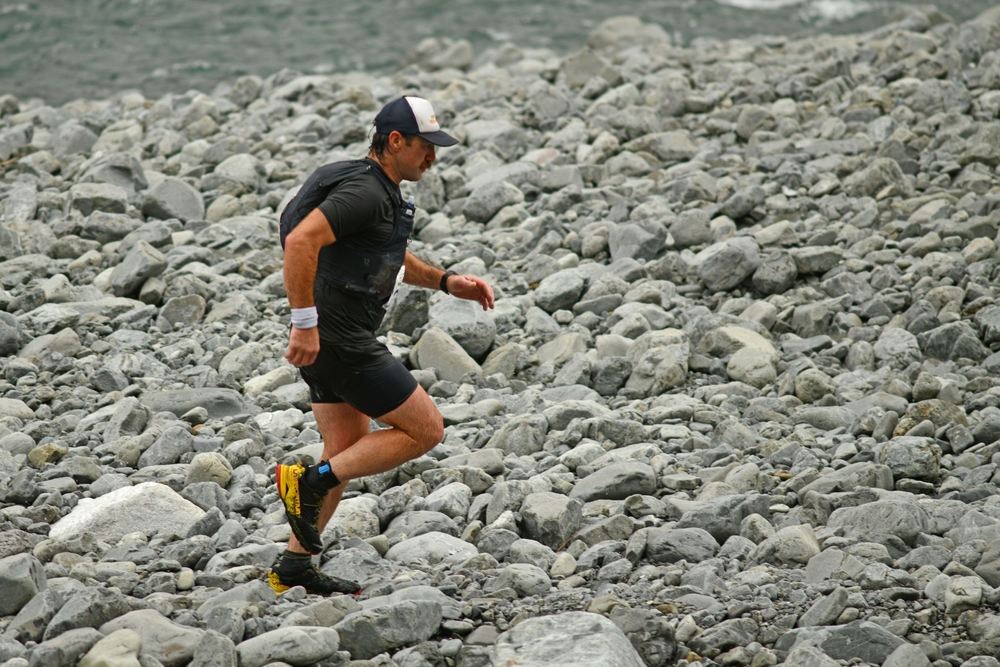
Have you recently increased your running distance, time, or training frequency and started to notice pain on the outside of your knee?
Outer knee pain is a common issue for runners and active individuals. One of the most frequent causes is iliotibial band syndrome (ITB syndrome). You can read about other causes of knee pain in runners, here.
Not only running though, ITBFS has been associated with sports including cycling, swimming, hockey, soccer, basketball and tennis.
Iliotibial band syndrome (ITB syndrome) is one of the most common causes of pain on the outside of the knee, particularly in runners.
The iliotibial band (ITB) is a thick band of connective tissue that runs from your hip down to the outside of your knee. It plays an important role in stabilising both the hip and knee during movement.

Image credit: https://www.orthopaedicsurgeon.com.sg/patients-education/leg/iliotibial-band-friction-syndrome/
ITB syndrome occurs when the tissues on the outer side of the knee become irritated due to repetitive bending and loading of the knee, especially during activities like running or cycling.
ITB syndrome is typically an overuse injury, often linked to changes in training.
Common contributing factors include:
While ITB pain was historically described as a “friction” problem, current understanding suggests it is more related to compression of tissues at the outside of the knee during repeated movement.
You may be experiencing ITB syndrome if you notice:
The good news is that most cases of ITB syndrome respond very well to physiotherapy.
Effective treatment focuses on addressing the underlying cause, not just the symptoms.
Your rehabilitation may include:
At The Healthy Body Company, we combine hands-on physiotherapy with gym-based rehabilitation to ensure you not only recover—but return stronger and more resilient.
If your knee pain is:
it’s worth having it assessed by your trusted health professional.
Early management can prevent a short-term irritation from becoming a longer-term issue.
At The Healthy Body Company, we regularly help runners and active individuals manage outer knee pain across our clinics in Penrith, Jordan Springs, Mount Annan, and Caringbah.
Our physiotherapists provide tailored rehabilitation programs that combine hands-on treatment, strength training, and structured return-to-running plans, helping you get back to what you enjoy with confidence.
The most common cause is ITB syndrome, often linked to increased training load, muscle weakness, or changes in running habits.
Running through pain can worsen symptoms. Modifying your training and getting guidance from a physiotherapist is recommended.
Recovery varies, but many people improve within a few weeks with the right rehabilitation approach.
If you’re dealing with pain on the outside of your knee, you don’t have to manage it alone.
Our team can assess your movement, identify the cause of your symptoms, and guide you through a structured plan to get you back to running and activity.
Book an appointment with The Healthy Body Company today